
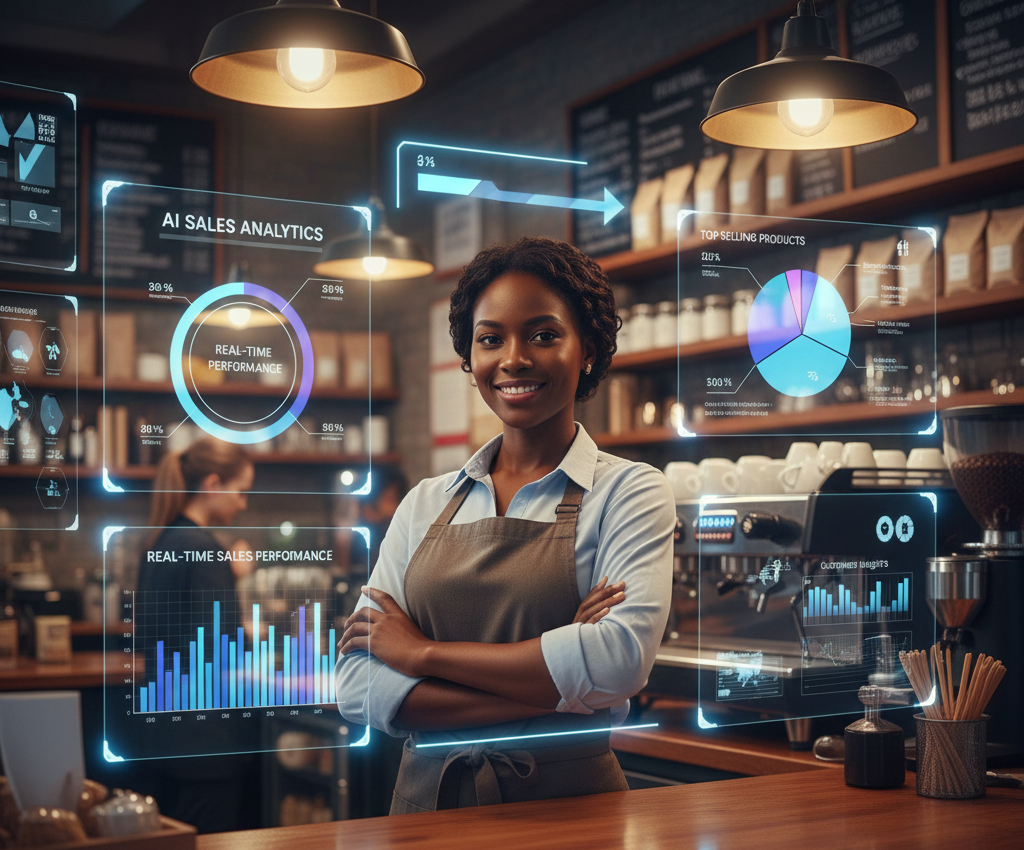
AI is no longer a luxury. It’s an equalizer.
The small business owner who learns how to integrate AI into daily operations; marketing, customer engagement, pricing, inventory, logistics will grow faster, reduce cost, and compete confidently with much larger competitors.
In 2026, small businesses are stepping into a competitive landscape where big brands now have AI departments, predictive analytics, and automated workflows running 24/7. But here’s the good news: for the first time in history, small businesses can access the exact same capability sometimes at zero cost.
1. Personalized Customer Experiences at Scale

Customers buy more when the experience feels tailored. In the past, personalization required huge data teams. Today, small businesses can automate it with lightweight AI tools.
How to Apply This in Real Life
- AI-powered email & WhatsApp personalization:
Platforms like Klaviyo AI, Mailchimp AI, and WhatsApp Business API can auto-segment customers based on behavior. Frequency of purchase, browsing history, and price sensitivity. - Scenario Example:
A small fashion boutique in Lagos uses an AI CRM to detect customers who haven’t bought in 45 days. The AI sends each person a different message: discount for some, new arrivals for others, style recommendations for high spenders.
Result = 30–45% increase in repeat purchases. - AI chat assistants on your website or Instagram DM:
Tools like Tidio AI or Intercom Fin handle common inquiries like sizes, delivery fees, availability instantly. Faster answers lead to higher conversion.
2. AI-Driven Pricing Strategies That Maximize Profit

Large companies use dynamic pricing. Small businesses can now do the same.
AI can analyze:
- Competitor prices
- Customer buying times
- Hot-selling products
- Slow-moving stock
And then suggest the best prices.
Practical Implementation
- Use tools like Prisync, Flint Pricing, or Shopify Magic to adjust product prices based on demand and inventory.
- Let AI recommend “profit-safe” discounts instead of giving blind, emotional discounts.
Real-Life Example
A small electronics seller uses AI to track competitor prices on Jumia/Konga. Instead of lowering prices blindly, the AI finds 10 specific products where he can increase the price slightly without losing sales.
Profit grows even with the same volume.
3. Predictive Inventory Management (Stop Overbuying and Underselling)

One of the biggest killers of small businesses is dead stock.
AI helps you know:
- What to reorder
- When to reorder
- How much to reorder
Predictive tools like Zoho Inventory AI, Quickbooks Commerce, or Sorted AI forecast demand using past sales, seasonality, and customer behavior.
Practical Example
A beauty store owner uses AI to predict that wig sales will spike before Christmas and Valentine’s Day. Instead of guessing, she stocks the right quantity early without overcommitting cash flow.
Outcome?
Higher sales + less capital trapped in inventory.
4. AI-Powered Marketing That Actually Converts
Marketing used to take hours. AI now compresses it into minutes but the quality must remain top-tier.
Content Creation That Drives Sales
- Use ChatGPT, Jasper, or Notion AI to generate sales scripts, captions, and newsletters.
- Use Canva AI or Adobe Firefly for branded visual designs.
- Use Descript AI or CapCut AI for professional-looking marketing videos.
AI for Ad Targeting
Platforms like Meta Ads (Facebook/IG), TikTok Ads, and Google Ads now offer AI-driven targeting that adjusts your audiences automatically for the highest conversions.
Real-Life Example
A small bakery runs TikTok ads. Instead of manually picking interests, the owner allows TikTok’s AI to find buyers interested in pastries and home deliveries.
The algorithm tests audiences, finds the best group, and optimizes the campaign.
The bakery sees atleast 2x return on ad spend.
5. Automating Customer Service Without Losing the “Human Feel”

Small businesses often struggle with replying fast enough. AI fixes this without making your brand sound robotic.
Tools that Work
- ManyChat AI for Instagram & WhatsApp
- Tidio for website chats
- Zoko AI for WhatsApp commerce
- Freshdesk AI for helpdesks
Real-Life Example
A gadget store receives 150+ DMs daily. Using AI auto-replies for FAQs like “How much?”, “Delivery time?”, “Warranty?”
The business now responds in seconds instead of hours and conversion increases because customers buy from the brand that responds first.
6. AI for Lead Scoring and Sales Predictions
Not every customer will buy. AI helps identify the ones who are most likely to.
Lead-scoring tools analyze:
- Customer clicks
- Time spent on pages
- Past purchase behavior
- Message responses
- Abandoned carts
These signals help you prioritize hot leads.
How Small Businesses Can Apply This
- Use HubSpot AI, Pipedrive AI, or Zoho CRM AI.
- Focus your energy on buyers with the highest intent.
Real-Life Example
A small real estate agency uses AI to identify which leads are actually serious. Instead of calling 200 people, the team calls the top 20 high-intent buyers.
The agency closes deals much faster.
7. Hyper-Efficient Operations with AI Automation

From accounting to logistics, AI can cut operational chaos in half.
Everyday Automation Ideas
- AI bookkeeping tools like Wave AI or QuickBooks AI automate expense categorization.
- AI scheduling tools like Motion plan daily tasks automatically.
- Delivery route optimization tools like Circuit AI reduce fuel and time costs.
These improvements free owners to focus on sales, not admin.
8. Building Customer Loyalty Using AI Insights

AI tools can analyze buying patterns and recommend loyalty programs that actually work.
Examples
- Offer points or cash-backs on items that drive repeat purchases.
- Use AI to create personalized loyalty tiers (Gold, Silver, VIP) based on engagement
- Use churn prediction tools to detect customers who might stop buying and send targeted offers.
Real-Life Example
A small gym uses AI to detect members at risk of quitting (missed classes + late payments). It automatically sends them a personalized motivational message and a discount for a renewal.
Membership retention rises.
FAQs: AI for Small Business Sales in 2026
1. Is AI expensive for small businesses?
Not at all. Many tools are free or freemium. You can start with simple integrations like AI email marketing, AI customer service, or AI content tools for less than $20–$50 per month.
2. Do I need technical skills?
No. Most AI tools are plug-and-play. They come with dashboards designed for non-technical business owners.
3. Can AI replace my employees?
AI won’t replace people, but it will handle repetitive tasks freeing your team so they can focus on selling, customer relationships, and strategy.
4. Will my customers notice I’m using AI?
Not if implemented properly. AI can maintain your brand voice and respond in natural language.
5. How fast will the results show?
Most businesses notice improvements in 2–8 weeks, depending on how deeply AI is integrated.
Conclusion:

Small businesses that embrace AI early will operate faster, market smarter, price better, and engage customers more personally than ever before. You don’t need a massive budget or a full tech team. You only need the willingness to experiment, automate, and let AI augment your daily work.
The gap between small and large businesses is narrowing because AI gives everyone the same superpowers.
In 2026, small businesses that integrate AI strategically will not only survive…
They’ll scale.
AI Is the Competitive Advantage for Small Businesses in 2026